See which open source vulnerabilities are exploitable
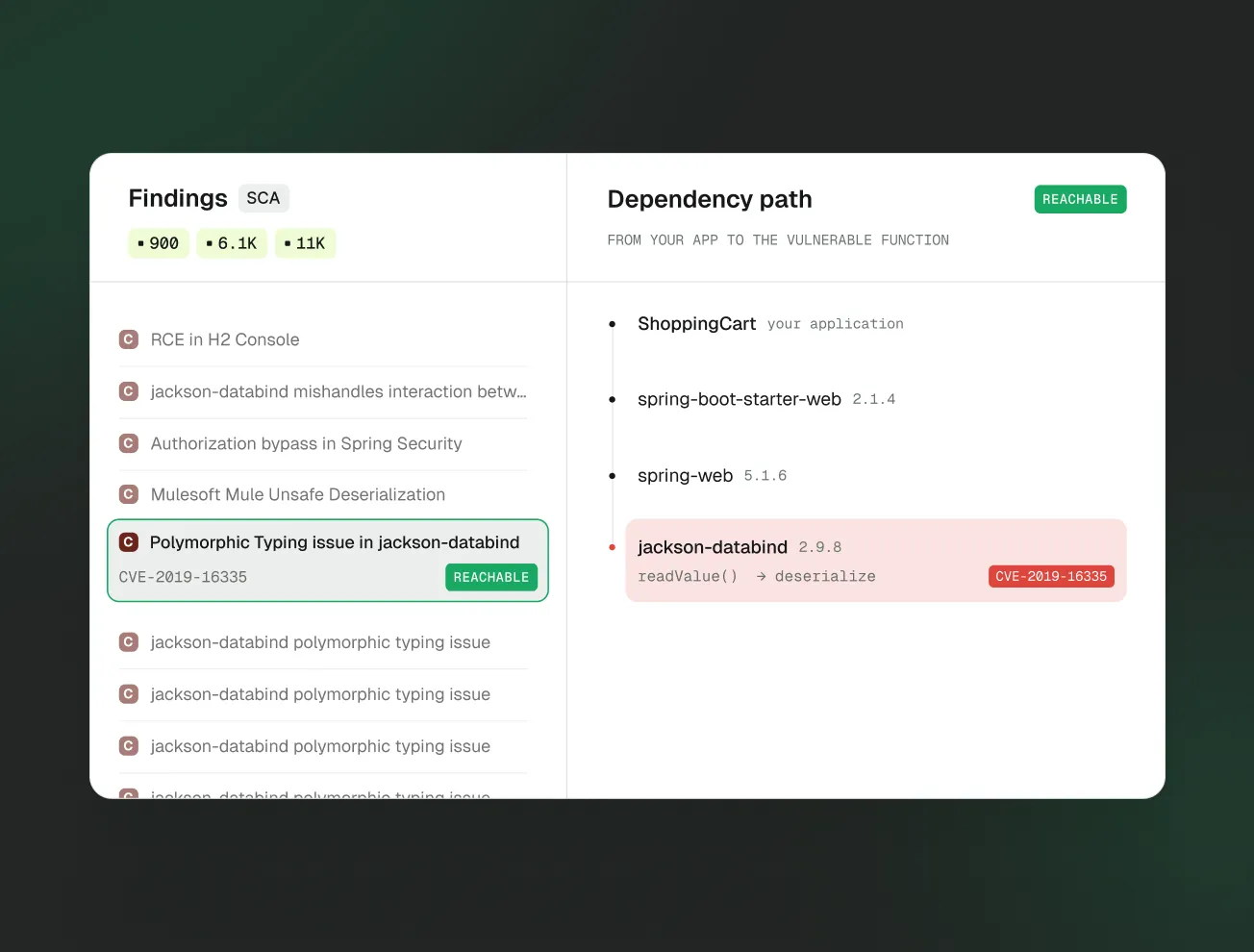






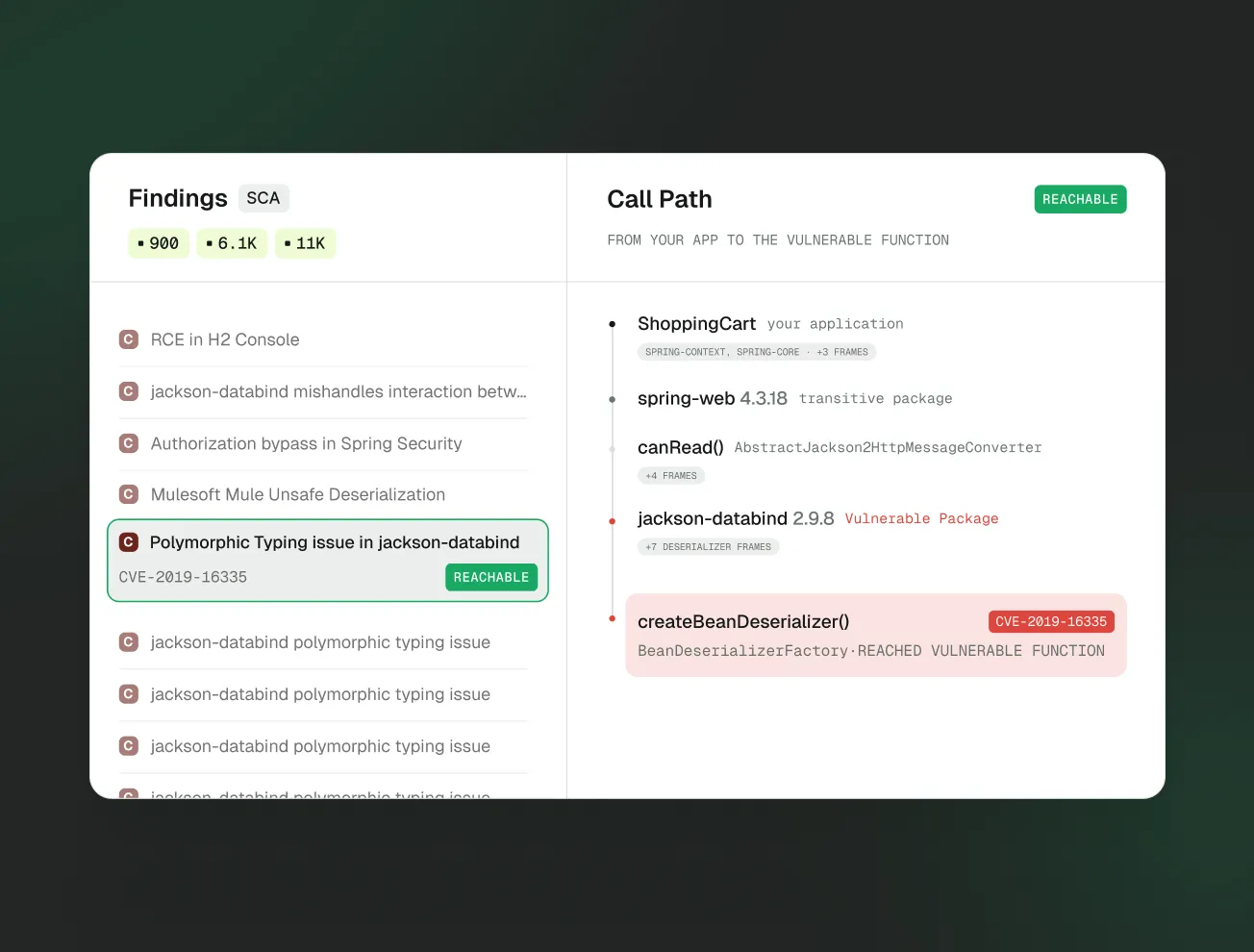
How SCA with Reachability works


Your Tools, Your Languages
— All Secured
FAQs
Instead of asking whether a vulnerable library is present, reachability asks whether the vulnerable function is actually callable in your application. Endor Labs analyzes this at the function level across direct and transitive dependencies.
Function-level reachability cuts SCA findings by 92% by filtering out vulnerabilities that aren't callable in your code, so developers focus on what's exploitable.
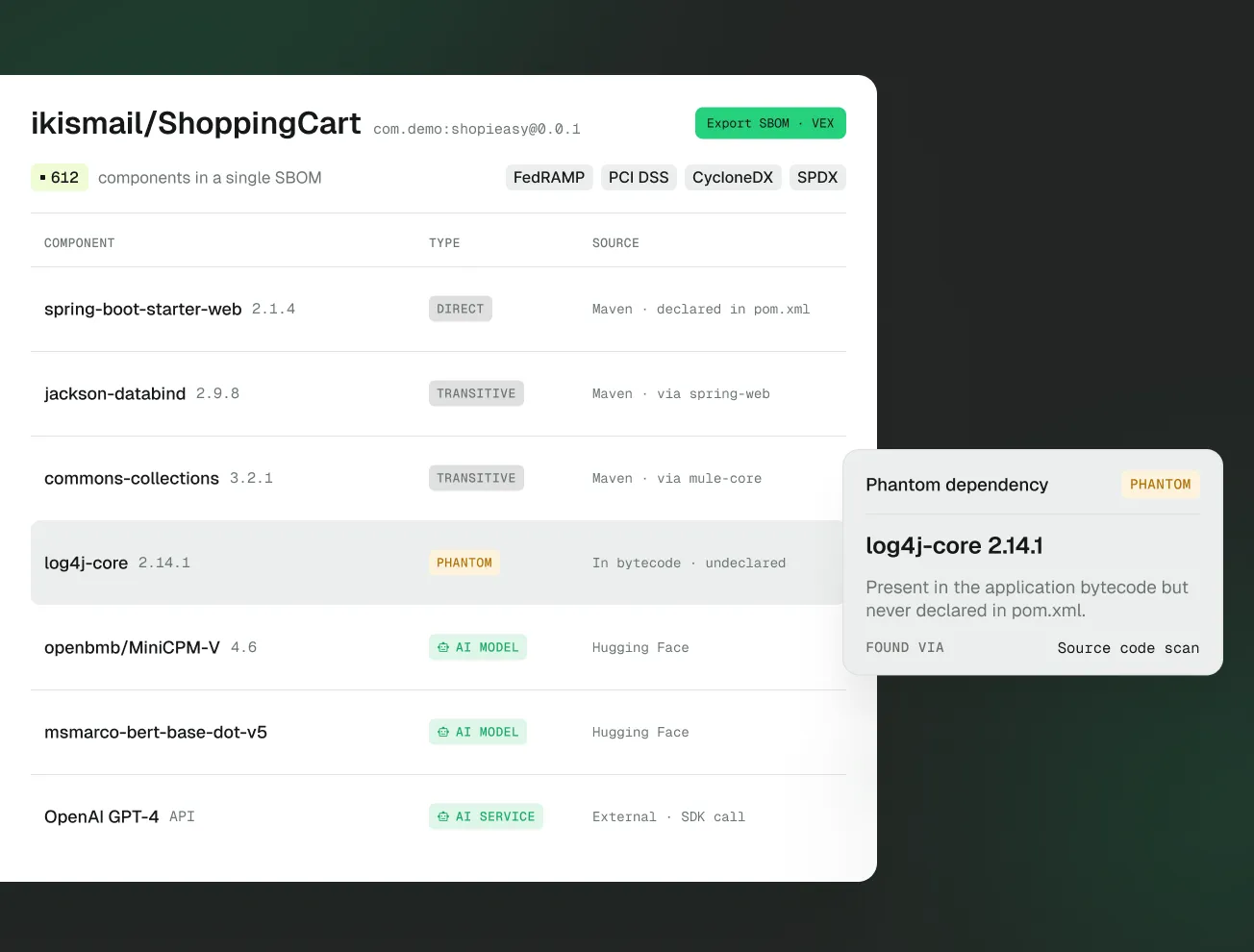
It scans source code as ground truth to catch transitive dependencies, phantom dependencies, and AI models and services that manifest-based tools miss entirely.
AURI Fix evaluates each reachable finding and recommends the fastest, least disruptive fix: a safe upgrade from Upgrade Impact Analysis, a targeted change to your own code or configuration, a backported patch from Endor Patches, or a replacement dependency identified by Endor Scores. Each fix comes with a VEX report that records why the vulnerability is no longer exploitable.
Yes. It builds a complete inventory including AI models and exports SBOM and VEX documents that meet FedRAMP, PCI DSS, and other requirements.
It combines reachability with EPSS, fix availability, and production context, and draws on proprietary CVE annotations going back to 2018 to rank the findings that matter most.